When people think of modern metal machining and fabrication, they often picture high-precision welding, grinding, cutting, and bending on machines driven by human talent and advanced technology.
They wouldn’t be wrong. Much of what we do today is based on these processes and project variables that help deliver high-quality products to our customers. However, one critical aspect of metalworking that helps determine the success of the finished component must be optimized long before any cutting, bending, drilling, or welding occurs: the raw material’s metallurgy.
Why Is Metallurgy Important In Metalworking?
Metallurgy is the science concerning the properties of metals, their production, and their purification, bridging the gap between raw natural resources and the finished metal products used in everything from vehicles and home appliances to industrial equipment and skyscrapers. Metallurgists specialize in studying the physical, chemical, and atomic properties of metals, such as aluminum, copper, iron, and lead, to influence the metals’ characteristics, including strength, corrosion resistance, and conductivity.
The science is divided into three branches:
Extractive Metallurgy
This branch involves the processes used to remove metals from their ores, using techniques such as pyrometallurgy (high-heat smelting and roasting processes), hydrometallurgy (water-based chemical solutions), and electrometallurgy (electricity-based methods).
Physical Metallurgy
Physical metallurgy focuses on the internal structure and behaviour of metals under various metalworking processes, such as heat treatment.
Mechanical Metallurgy
This study examines how metals respond to external forces such as tension, compression, and stress, ensuring that the finished product won’t fail under pressure.
Metallurgy forms the basis of every metal object you use in everyday life, making it not only critical to manufacturing but also to how society functions. However, to ensure that the metal performs efficiently in their final application, metal alloys must be created from the base materials extracted.
What Are Metal Alloys?
Metal alloys are a mixture of two or more metal or non-metal elements to create a final material for metalworkers to machine and fabricate. These alloys possess superior properties compared to pure metals, which are often too soft or reactive for industrial use.
For example, the right mixtures of elements can produce alloys with increased corrosion resistance, lighter weight, optional thermal or electric conductivity, lower melting points, or better tensile strength for virtually any application.
How Are Metal Alloys Created?
Alloys are produced in a variety of ways. Here are four of the more common alloy creation processes:
Melting And Mixing
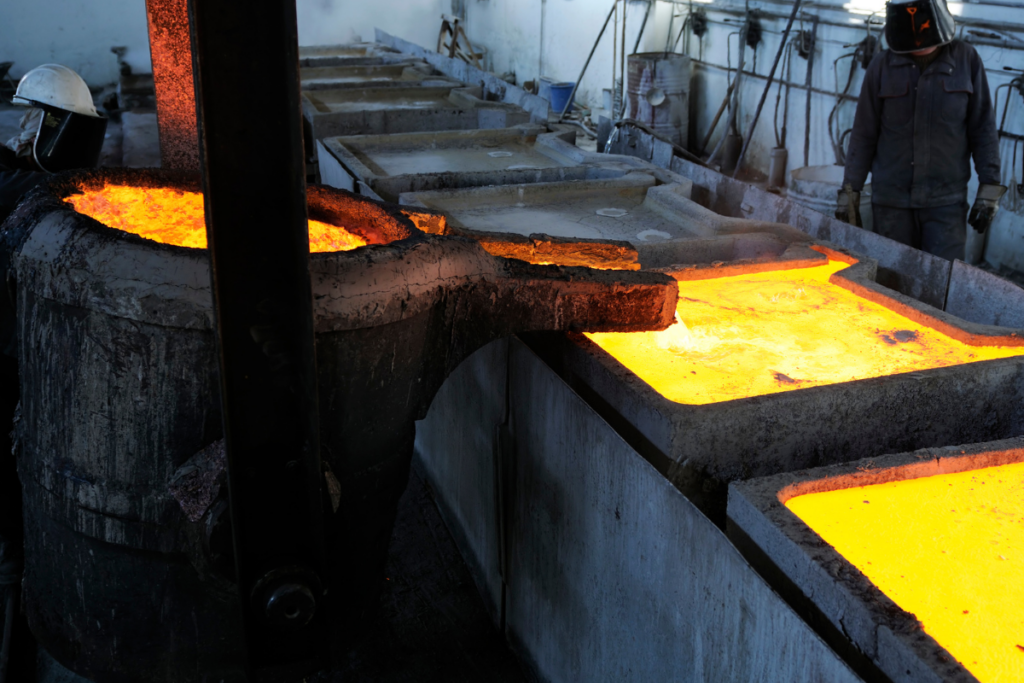
This procedure is one of the oldest forms of metallurgy. It involves heating the base metal in an electric arc, induction, or other type of furnace until molten. Metalworkers then add alloying elements, which dissolve and blend right down to the atomic level.
Powder Metallurgy
This process is typically used for elements with vastly different melting points. Metalworkers blend fine metal powders, compact them under pressure, and then heat them below the melting point (a process known as sintering) to bond the particles into a solid mass.
Ion Implantation
In this specialized technique, high-energy ions of an alloying element are fired into the surface of a metal. Implanting the element is often ideal as it modifies the metal’s surface properties without melting or otherwise changing the bulk material.
Mechanical Alloying
Mechanical alloying is the process in which powders are ground together in high-energy ball mills, using repeated impacts to create a solid-state alloy through diffusion.
Read More: Transformative Metalworking Trends To Expect In 2026
Critical Metalworking Processes Under Metallurgy
Once the alloy is ready for production, it is sent for downstream machining and fabrication. During production, there are additional methods that can be undertaken to further prepare the material for its final application, such as:
Heat Treatment
Heating and cooling metal at specific rates change its internal structure, making it significantly harder, tougher, or more ductile without changing its shape
Casting
This process involves pouring molten metal into a mould where it solidifies, altering the metal’s properties so it has consistent strength throughout
Forging
Using high-pressure compressive forces such as hammering or pressing, forging forces the internal “grains” of the metal to follow the actual contour of the part, making it much more resistant to fatigue and impact.
Rolling
The rolling process passes metal through heavy rollers to reduce thickness and densify the grains, increasing the material’s hardness and yield strength.
Once all required processes are completed, the piece is ready for final quality inspection before being sent for further processing or assembly.
Partner With Arrow Machine And Fabrication Group For High-Quality Metal Parts And Components
At Arrow, we combine traditional metallurgical practices, advanced technology, and skilled talent to produce products of unmatched quality and designed to perform efficiently in virtually any application.
Contact our team today to learn more about the benefits of partnering with Arrow.
Read More: Our Story of Growth: How Arrow Nurtures Success For Our Partners